

Working at Height Training Course
Course Dates
WORKING AT HEIGHT PERMITS ARE REQUIRED BY ALL STATE AUTHORITIES WHEN WORKING AT HEIGHTS IN AUSTRALIA.
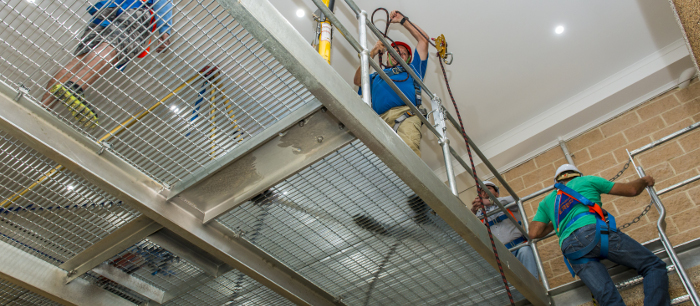
If personnel are working in an environment with a risk of falling from one level to another, the employer is mandated to mitigate such occurrences by providing the appropriate equipment and training. Our Working at Height courses are designed to provide the necessary knowledge and practical awareness to maintain a safe work area and respond to any fall incidents. Our Work at Height Training Certificate is nationally recognised.
Upon completion of our Height Safety Training programme participants will receive a Statement of Attainment in Units of Competency:
WE CONDUCT HEIGHTS TRAINING FROM MONDAY TO FRIDAY & NEVER CANCEL A PROGRAMME. Please book with confidence knowing the course will go ahead.

Sydney Safety Qualification Advantages
Participating in a nationally accredited Sydney Safety training course provides you with the necessary permit to legally work at height Australia-wide. Our trainers are exceptionally skilled and experienced professionals who will provide you with the very best level of awareness and knowledge. They take care to ensure you develop the skills to competently work at height and mitigate or respond to any fall-related incidents. When you select Sydney Safety, you select the best in the business.
Working at Heights Training Outcomes
All training is based on the Heights Code of Practice. Upon completion of our Height Safety Training programme participants will receive:
- A Statement of Attainment in Units of Competency.
- Work Safely at Heights RIIWHS204E issued through RTO Safety Training RTO #40992
Working at Height Training Course Format
The Working at Heights course commences at 7:30 am at Villawood Training Centre NSW. The course duration is one day.

Participants will be reviewed in skills and knowledge around:
- Regulatory requirements
- Risk assessment & hierarchy of controls
- When fall prevention is required
- Alternate means of accessing heights
- Height Safety Equipment
- Safe anchoring
- Pre & post operational checks
- Equipment maintenance
- Rescue requirements/practical rescue
- Elevating work platform (EWP)
All participants are required to:
- Conduct a site risk assessment
- Correctly fit a harness
- Climb a fixed ladder using a type #1 fall arrestor
- Operate a rope grab
- Use a twin tail lanyard on static line and while climbing
- Use an inertia reel
- Climb a pole and establish a pole strap
- Establish a temporary anchor point
- Connect to a permanent anchor point
- Conduct a heights self-rescue
- Access, traverse and descend of a roof
- Observe an overhead rescue being demonstrated.
This training will require you to participate in physical practical exercises. Ensure you are fully aware of the hazards and risks prior to participating and understand the control measures employed.
Participants are supplied with a Height Safety Training Manual for the programme.
Working at Height Training Courses Preparation
We strongly advise you to familiarise yourself with the National Workplace Health and Safety Act, and in particular the National Code Of Practice for Managing the Risks of Falls at the Workplace.
Please print off your:
- Working height safety pre-course training overview reading notes.
- Course attendance letter – for all students attending the course.
- Height Safety Course details.
Work Safety Course Student Testimonials
Find out what students with our Working at Height qualification think of Sydney Safety – visit our client testimonials page.
Additional Formal Heights Rescue Training
If your staff require formal heights rescue training, we do conduct a second day of training after the normal Safe Work at Heights course where your staff receive intensive training in heights rescue. Whilst our Working at Heights Safely Training Course covers height rescue, it does not provide a unit of competency for this specific area. With the additional day’s formal training, your staff will conduct numerous heights rescues, including self-rescue, pole top rescue, overhead rescue using a GOTCHA Kit, and overhead rescue using a ROLLGLISS heights rescue kit.
Working in Height Public Courses
Training at our site means you can send staff along for public programmes at times suitable to your work commitments. You can send up to ten staff, but for these numbers we would also arrange special dates/times for your group.
Our safe work at heights course starts at 7:20 am at our Villawood Training Centre. This course takes only ONE DAY and finishes by 3 pm. Due to the popularity of this course, we add additional programmes each week based on demand – keep an eye on this page for updates.
Working at Heights Onsite Safety Course
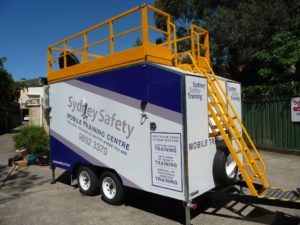
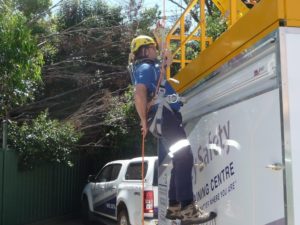
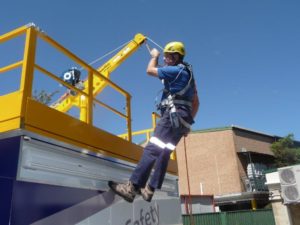
We can book dates and times to suit up to ten staff if you require onsite training. We arrive on-site with a purpose-built “Height Safety Training Trailer” to ensure your staff receive a quality and safe training experience. This trailer enables us to train in anchoring and the use of lanyards and rope grabs, static lines, pole straps, self-rescue descents, control rescue devices, climbing ladders with twin tails, and overhead rescue.
For more details, watch our mobile training unit video.
For more details on our “Mobile Training Centre” and video, please click here.
Work at Height Course Fees
The following fee structure applies to our Safe Work at Heights training course.
- Public Course Bookings at Villawood
* $225 GST FREE per person
* Group discount applies for group bookings for up to 10 fixed at $1650 GST FREE
* Saturday courses at $265 per person - Onsite Course Bookings
* This training is conducted at a cost of $2100 GST FREE for up to ten staff at your site
* Travel to/from site is $85.00 + GST per hour
* Airfares & hire car at cost if not organised by client
* Accommodation if not supplied by client is billed at cost.
* For training at your site, please fill out our RST T-0021 Onsite Training Checklist
PARTICIPANTS MUST BE ABLE TO COMMUNICATE IN ENGLISH AND FILL OUT ALL NECESSARY DOCUMENTATION. Where lack of English is a challenge, we can still provide training. However, it needs to be on a specially scheduled programme and YOU WILL NEED TO provide an interpreter.
If you can only do weekend training, please click on our Working at Heights weekend course for details.
Visit our Working at Heights questions and answers page for more information.